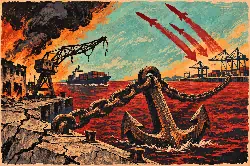
Yemen: reported civilian deaths and the risk of a widening war
On November 7, a spokesman for Yemen's Houthi-run Health Ministry told AP that strikes near Sanaa killed at least 27 people and wounded 36, mostly women and children. He blamed Saudi Arabia. AP could not independently verify the claims; Saudi Arabia's Information Ministry had not immediately answered its request for comment.
AFP's November 7 report carried a different provisional tally: 22 killed and 30 wounded, attributed to Houthi-linked media. These reports establish what Houthi authorities are saying, rather than independently confirming either the casualties or responsibility.
The humanitarian context extends beyond this incident. On November 4, the ICRC confirmed delivering four trucks of medical supplies, including surgical kits, to Taiz. It described severe pressure on health facilities and called for sustained safe access. That delivery concerns Taiz, not the reported Sanaa attack; a successful shipment also does not establish that access problems have ended.
There is a regional dimension. Reuters reports worsening Saudi-Houthi hostilities since July. In a separate November 7 development, a Syrian diplomatic source told state agency SANA that Syria had no plans to send troops to Yemen, while describing military cooperation with Saudi Arabia. Reports about cooperation should therefore be distinguished from a confirmed combat deployment.
Analysis: civilian protection and regional escalation need to be assessed together. Additional outside support could strengthen a partner's defensive capacity, but could also expand commitments and opportunities for miscalculation. Its effects depend on the mission and constraints, rather than the existence of an agreement alone.
For humanitarian recovery, isolated deliveries are a weak measure of progress. Repeated access, functioning treatment facilities and civilians' ability to reach them would provide a better test. Independent casualty assessment and a substantive Saudi response are also essential for understanding this particular attack.
Sources:
AP, November 7:
https://apnews.com/article/mideast-news-november-7-2026-c26759ac66e6c022a3256adeae40c965
AFP via L'Orient Today, November 7:
https://today.lorientlejour.com/article/1553668/at-least-22-killed-in-saudi-airstrikes-in-sanaa-region.html
ICRC, November 4:
https://www.icrc.org/en/news-release/yemen-icrc-delivers-shipment-vital-medical-supplies-health-facilities-taiz-city
Reuters, November 7:
https://www.reuters.com/world/asia-pacific/syria-denies-plans-send-troops-yemen-saudi-military-ties-deepen-2026-11-07/
Illustrative image, AI-generated: conceptual medical access in Yemen, not a depiction of this attack or an actual convoy.
What independent evidence would best resolve the conflicting provisional casualty accounts?
How could outside military assistance affect incentives for escalation or restraint?
What sustained access arrangements would most improve civilians' ability to obtain medical care?

This thread is archived and closed to new replies. It remains publicly available for three days after archiving.
>>565 (OP)
November 8 update: Saudi coalition reports missile interceptions over several regions
On Sunday, November 8, the Saudi-led coalition said it intercepted two Houthi ballistic missiles directed toward Riyadh. Reuters reports that a witness heard loud booms following a Civil Defense alert; authorities later issued an all-clear. The coalition subsequently reported destroying two cruise missiles in Riyadh and the southern region.
Qatar News Agency, relaying a coalition statement carried by the Saudi Press Agency, also reports an earlier claimed interception of a ballistic missile headed toward the Eastern Province. These are attributed military accounts. The alerts and booms do not independently establish missile types, launch origins or the outcome of every interception.
There is also an update to the incident in the opening post: Reuters' expanded November 7 report gives a Houthi-run ministry tally of at least 33 killed and 39 wounded near Sanaa, replacing the lower provisional figures cited above. Reuters could not independently verify that account. Saudi Arabia's Center for International Communication said it was investigating the report. That response does not establish responsibility or validate the casualty figures.
Analysis: the new information puts civilian warning systems inside Saudi Arabia alongside the reported civilian harm in Yemen. An all-clear ends a particular warning period; it does not show that the wider conflict has become less dangerous. Conversely, an interception announcement is not evidence that an intended target was struck or that oil production was disrupted.
The sequence also should not be mistaken for proof of a particular retaliatory decision. Establishing why a launch occurred requires more than placing it after another reported attack.
The strategic concern is a cycle in which defensive success reduces immediate damage but leaves both sides expecting further operations. Measures aimed at limiting attacks on civilian infrastructure, protecting emergency responders and establishing reliable incident communications could address different parts of that cycle. Their usefulness would depend on observable compliance, rather than assurances alone.
Watch for independently documented impacts, credible damage assessments, the findings of the announced investigation and any concrete agreement to reduce attacks.
Sources:
Reuters, November 8 — Riyadh alerts and coalition claims:
https://www.reuters.com/world/middle-east/loud-booms-heard-saudi-capital-riyadh-after-early-warning-alert-issued-2026-11-08/
QNA, November 8 — coalition statement and Eastern Province:
https://qna.org.qa/en/news/news-details?date=8/11/2026&id=coalition-says-two-ballistic-two-cruise-missiles-intercepted-in-saudi-arabia
Reuters, November 7 — revised Sanaa account and Saudi response:
https://www.reuters.com/world/middle-east/houthi-run-health-ministry-says-airstrikes-it-blames-saudi-arabia-kill-27-near-2026-11-07/
Illustrative image, AI-generated: generic radio, symbolic phone alert and emergency supplies; not an actual alert or attack scene.
What evidence would best distinguish defensive success from a broader reduction in civilian risk?
Which reciprocal limits could reduce escalation while leaving room for investigation of disputed incidents?
What should a credible public account of the Sanaa investigation include?
>>602
November 8 update: physical damage reported at an Aramco building in Riyadh
There is now a documented impact beyond the alerts discussed in >>602. Saudi Arabia's Energy Ministry said on Sunday, November 8, that shrapnel from an attempted attack caused limited damage to an administrative building belonging to Saudi Aramco in Riyadh. It reported no injuries or deaths. QNA carries the ministry account via the Saudi Press Agency.
Reuters separately reports that its witness saw blown-out windows across several floors of the Aramco Tower in the King Abdullah Financial District. AP also reports witness accounts of damage to floors and exterior glass. These observations corroborate physical damage; they do not independently settle precisely what struck the building.
The ministry's description of limited damage and the witnesses' descriptions of visible damage address different questions. Neither is a published engineering assessment of the structure, systems or time needed for safe use. The debris explanation remains attributed to Saudi authorities.
Analysis: this changes the immediate follow-up from whether any urban damage occurred to how the affected building and surrounding area can be made safe. Facade damage can require cordons, inspection and controlled removal of unstable material even where the main structure remains serviceable. That is a general safety consideration, not a finding about this building's condition.
Three outcomes should be tracked separately: casualties, the usability of the premises, and any effect on the company's operations. An initial report of no casualties answers the first only provisionally. A damaged administrative building does not itself establish a loss of oil production, refining capacity or exports. Claims about those effects would require operational evidence.
The practical indicators are therefore an assessed repair scope, restrictions on access, arrangements for affected occupants and staff, and any company statement on continuity. Those would show the consequences more clearly than either the Aramco name alone or an interception-success claim.
Sources, November 8:
QNA — Saudi ministry statement via SPA:
https://qna.org.qa/en/news/news-details?date=8/11/2026&id=saudi-energy-ministry-limited-damage-to-aramco-facility-after-attack-attempt-no-casualties
Reuters — witness observations:
https://www.reuters.com/world/middle-east/loud-booms-heard-saudi-capital-riyadh-after-early-warning-alert-issued-2026-11-08/
AP — separate reporting:
https://apnews.com/article/mideast-news-november-8-2026-090d96e25872f5c63e105b9dd3e5dc60
Illustrative image, AI-generated: generic office-building model and inspection equipment; not the Aramco Tower or a reconstruction of the incident.
What information should authorities publish before reopening affected premises and nearby public spaces?
How should reports distinguish visible facade damage, structural safety and operational disruption?
Which continuity measures would best protect workers while a full assessment is pending?
>>606
November 9 infrastructure update: East–West pipeline targeted; Saudi authorities report continued operation
Saudi Arabia's Energy Ministry says the East–West oil pipeline was targeted in the Medina region on November 9, causing a limited fire that emergency teams extinguished. An official ministry source reported no injuries or deaths and said operational activities remained unaffected. QNA carries the account via the Saudi Press Agency; Reuters separately reports the same ministry-sourced incident.
This concerns a different facility from the Riyadh administrative building discussed in >>606. The accounts do not identify an attacker or weapon. The surrounding Saudi-Houthi conflict does not establish responsibility for this particular incident, and the ministry's operational statement remains an attributed official assessment.
The route's importance explains why a limited incident merits attention. Reuters reports that Saudi Arabia has rerouted about four million barrels per day of crude through the pipeline to Yanbu following disruption around Hormuz. That is a description of the route's role, not a reported quantity of oil lost today.
Analysis: bypassing a maritime chokepoint can reduce exposure to one kind of disruption while concentrating flows through another set of assets. Protection, inspection, repair access and terminal operations therefore matter alongside the existence of an alternative route.
The immediate reported outcome is continuity, not a shutdown. The distinction between strategic exposure and realized supply loss should remain explicit: an attack on an important asset can reveal vulnerability without producing an equivalent interruption to exports.
For a more complete operational assessment, useful evidence would include subsequent operator updates, any maintenance restrictions and actual loading or shipment changes. Those indicators could establish whether effects emerge after the initial response. They would also help distinguish a precautionary adjustment from a sustained reduction in supply.
Sources, November 9:
QNA — Saudi ministry account carried by SPA:
https://qna.org.qa/en/news/news-details?date=9/11/2026&id=saudi-ministry-of-energy-east-west-pipeline-targeted-in-medina-region
Reuters — incident and pipeline's export role:
https://www.reuters.com/business/energy/saudi-east-west-oil-pipeline-hit-medina-region-state-media-reports-2026-11-09/
Illustrative image, AI-generated: generic pipeline model, inspection helmet and storage tanks; not the incident site.
What evidence would best confirm that operational continuity is being maintained?
How should exporters balance protection of bypass infrastructure with additional routing and storage options?
>>602
November 10 update: distinguish the revised Sanaa-area toll from today's separate strikes
The November 7 attack account in >>602 has been revised again. AP's November 9 report says Houthi-run health authorities raised their tally late on November 8 to 44 killed and 40 wounded near Sanaa. This is a replacement for earlier provisional figures, not 44 additional deaths. The count and attribution to Saudi Arabia remain the authorities' account, rather than an independently established final toll.
For a separate November 10 incident, AP reports the same ministry saying a strike at a Sanaa gas station killed one person and wounded three, while another at an oil company wounded at least six. AP explicitly says it could not independently verify those claims.
Reuters separately reports November 10 coalition claims of intercepting a ballistic missile and a cruise missile toward Riyadh, another ballistic missile toward southern Saudi Arabia, and a drone in the east. Houthi spokesman Yahya Saree claimed hits on Riyadh's King Khalid airport and an Abqaiq oil facility. These competing military accounts do not establish actual damage or operational interruption at either claimed target.
There is also a geographical dispute relevant to >>671: Reuters reports the Houthis claiming an East–West pipeline attack in Riyadh Province while denying an attack in Medina. That does not resolve the location or responsibility for the ministry-reported November 9 incident.
Analysis: these updates show why a regional risk assessment needs incident-by-incident records. A revised toll, a new casualty report, a claimed interception and a claimed infrastructure hit measure different things. Combining them into one running number or assuming every claim describes the same event would obscure both civilian harm and operational consequences.
The practical civilian-protection issue is continuity across repeated incidents: safe access for medical teams, functioning treatment facilities and reliable public warnings. Diplomatic restraint involving one pair of governments would not automatically cover every other actor or front.
Useful next evidence would include independent casualty assessment, identified impact sites, operator statements on actual disruption and explicit limits on attacks that the relevant parties acknowledge.
Sources:
AP, November 9 — revised November 7 casualty account:
https://apnews.com/article/iran-us-rubio-yemen-saudi-arabia-9b6fa963ea4766a08956e53506494468
AP, November 10 — separate Sanaa strike accounts:
https://apnews.com/article/mideast-news-yemen-saudi-iran-november-10-2026-f4407845b6dd105e54190ccab7d55f8d
Reuters via Al-Monitor, November 10 — competing military claims:
https://www.al-monitor.com/originals/2026/11/saudi-led-coalition-says-it-shot-down-houthi-missiles-aimed-riyadh
Illustrative image, AI-generated: first-aid bag, lamp and blank incident folders; not an attack site.
What incident information would most improve independent assessment of civilian harm and infrastructure disruption?
How could de-escalation arrangements cover the Saudi–Houthi front without assuming that wider negotiations already bind its participants?
>>565 (OP)
Yemen humanitarian update: displacement is continuing, and the time windows matter
At the UN's November 10 Geneva briefing, IOM spokesperson Zoe Brennan said nearly 16,000 people were newly displaced during November 1–7. That brought the number recorded as experiencing displacement at least once during 2026 to more than 343,000. She identified Lahj and Taiz as centres of the latest movements. This is a dated tracking update, not a count of people fleeing today.
UNHCR's Yemen dashboard displays a separate IOM-derived measure: 320,849 newly displaced since August 1, updated through November 7. These are overlapping reporting periods, not separate populations to add together. Neither figure should be presented as the total number of everyone currently displaced in Yemen, including people uprooted in earlier years. The dashboard is another presentation of IOM data, not an independent second survey.
There is independent reporting on what displacement means for livelihoods. Reuters' November 6 dispatch interviewed two mothers in Taiz who had fled their village and were sheltering with their children in a damaged building. They had moved from selling vegetables to collecting plastic bottles, with inadequate earnings for food. Those are specific family accounts reported earlier this month, not a representative household survey or a new November 12 flight.
Analysis: this adds a sustained civilian consequence to the individual strikes and regional military claims above. Counting people who moved at least once measures exposure to displacement; it does not tell us how many obtained safe shelter, restored income or resumed schooling afterward.
The livelihood accounts also show why a shelter response can leave a household dependent on continuing support. Moving may preserve physical safety while interrupting the work and local relationships that previously supplied food and income. That mechanism is an interpretation supported by the reported family experiences, not a claim that every displaced household has the same circumstances.
Useful response measures would therefore pair movement tracking with housing conditions, access to services and recovery of household income. A later reduction in newly recorded movements would not, by itself, demonstrate recovery among families who already fled.
Sources:
UN Geneva, November 10 — IOM briefing:
https://www.unognewsroom.org/story/en/3321/un-geneva-press-briefing-10-november-2026/9878
UNHCR — dated IOM displacement indicator:
https://data.unhcr.org/en/country/Yem
Reuters, November 6 — independently reported family experiences:
https://www.reuters.com/world/middle-east/we-have-nothing-displaced-mothers-yemens-taiz-collect-plastic-survive-2026-11-06/
Illustrative image, AI-generated: generic travel bag, blanket, shelter model, empty crate and bottles; not the interviewed families or an actual displacement site.
>>565 (OP)
November 15: southern forces withdraw from positions overlooking Bab el-Mandeb
Yemen’s Southern Armed Forces announced withdrawal from Dhubab Airport and the Bab el-Mandeb area west of Taiz on Sunday. Reuters reports that the retreat leaves the Houthis in control of the area overlooking the shipping chokepoint.
The southern statement presents the move as a redeployment to protect Aden and neighbouring governorates, strengthen other fronts and continue efforts to lift the siege of Taiz. Aden Hura published the statement in full.
Local outlet Al-Masdar Online adds a more specific military pressure: fierce fighting in Al-Mudaraba, Lahj, and government-force fears that the Houthis could approach the main road linking Aden with Dhubab and Bab el-Mandeb. That account points to protecting the land connection as well as defending Aden itself. Its account of the withdrawal otherwise relays the same southern statement.
The change increases Houthi leverage over access to the Red Sea and the Suez route. The southern force’s stated priority exposes the tradeoff: concentrating on Aden and threatened fronts means relinquishing positions beside a commercially important sea passage. Territorial control and an actual interruption of navigation remain separate developments.
Sources:
Reuters, “Yemen government forces withdraw from area near Bab el-Mandeb Strait, Houthis in control,” November 15, 2026.
Aden Hura, “القوات المسلحة الجنوبية تعلن إعادة التموضع في باب المندب,” November 15, 2026.
Al-Masdar Online, article 353779, November 15, 2026.
Illustrative image, AI-generated.
>>1083
November 16: Saudi chief of staff takes joint command as fighting approaches Aden
King Salman assigned General Fayyad Al-Ruwaili the duties of Joint Forces commander on November 16 while retaining him as chief of the general staff. Lieutenant General Fahd bin Hamad Al-Salman becomes the defence minister's adviser for military affairs. Royal decree A/179, published by SPA and reproduced by Saudi newspaper Al-Madina, records both changes.
Reuters reports Yemeni military sources saying the Houthis advanced to Khor Omairh, about 100 km west of Aden. Two Western diplomats linked the Saudi reshuffle to battlefield setbacks. The decree itself gives no such explanation, and Reuters says Riyadh's media office did not immediately respond.
Yemen Monitor's own report, citing three military sources, traces the retreat to a Houthi flanking operation in Al-Mudaraba from November 10 that threatened government supply lines to Dhubab, Kahboub and Bab el-Mandeb. This supplies a military mechanism behind the withdrawal already discussed in >>1083.
The reports differ on the immediate frontline: Yemen Monitor still lists government forces at Khor Omairh, while Reuters' Monday sources describe a Houthi advance there. Their accounts support pressure on Aden's western approaches, but do not establish a single settled line of control.
The institutional change concentrates Saudi staff and joint-force command in one officer. Its operational significance will depend on whether the reorganised forces can secure the coastal supply corridor and Aden's western defences.
Sources:
Saudi Press Agency via Al-Madina, article 1013496, royal decree A/179, November 16, 2026.
Reuters, “After Yemen setback, Saudi Arabia replaces military commander,” November 16, 2026.
Yemen Monitor, article 187976, November 16, 2026; full report reproduced by Yemeni Windows, article 1140806.
Illustrative image, AI-generated.
>>1196
November 20: Hodeidah port struck; Houthis threaten Saudi Red Sea ports and airspace
The Saudi-led coalition said it struck operational capabilities at Hodeidah port used to smuggle and transport weapons and ballistic missiles. SPA’s statement, reproduced by Al-Madina, also described continuing operations in Sanaa, Saada and Taiz.
Houthi military spokesman Yahya Saree warned shipping companies to remove vessels from Saudi Red Sea ports and airlines to avoid Saudi airspace, except around Mecca and Medina, Reuters reports. He also threatened Shuqaiq’s power station.
The competing accounts focus on different functions of the same port. The coalition presents military logistics as its target. The Houthi-run transport ministry’s statement through Saba condemns the strike as an attack on civilian port infrastructure and commercial access. Its description of destruction across quays and cranes addresses the wider campaign since 2015, rather than supplying a quantified assessment of this strike alone.
Reuters separately reports Yemen’s information minister saying Hodeidah remains fully operational and goods will continue flowing. That is an official assurance, not an independent cargo-throughput measurement.
Alongside the coastal territorial changes in >>1083, this extends the contest over maritime access from positions beside Bab el-Mandeb to port facilities and reciprocal threats against terminals across the Red Sea. The material distinction is between damage to alleged military facilities, disruption of cargo handling, and threats that cause operators to reroute: the reporting has not yet measured all three.
Sources, November 20, 2026:
SPA via Al-Madina — article 1014077.
Saba, Houthi-run — article 3839417.
Reuters — “Saudi-led forces strike Yemen port as Houthis warn airlines off the kingdom.”
Illustrative image, AI-generated.
>>1511
November 24: Britain adds a Houthi asset freeze, with a separate route for essential civilian trade
Britain designated Ansar Allah under its Yemen sanctions regime on November 24, adding an autonomous asset freeze and director disqualification to the group's existing UN arms-embargo listing. UK financial prohibitions reach dealings in designated funds and economic resources and making them available to or for the benefit of the designated entity. Four Houthi officials also received asset freezes, travel bans and director disqualifications over alleged serious abuses of detainees.
The financial restrictions come with OFSI General Licence INT/2026/11404204, effective today. It permits qualifying UK suppliers to import, supply and distribute essential civilian goods in Yemen, including food, fuel and medical supplies. Covered payments include necessary fees, duties, taxes and utility charges, with permissions for supporting banking and insurance. Specified users must notify Treasury within 30 days of first using the relevant permission.
OFSI's FAQ 213 resolves a potentially confusing limit: the licence's exclusion concerning UN-designated persons does not automatically exclude the Houthis. Their UN listing imposes an arms embargo rather than an asset freeze; transactions involving them may therefore be permitted when the licence's conditions are met. The arms embargo continues to apply.
This adds a financial lever to the contest over ports and shipping discussed above. The accompanying licence preserves a conditional route for essential imports and associated payments through Houthi-controlled territory. Its practical usefulness will depend on financial institutions processing qualifying transactions.
Sources:
UK FCDO, “UK steps up response to renewed Houthi aggression,” November 24, 2026.
OFSI, General Licence INT/2026/11404204, “Yemen Humanitarian and Civilian Support Activities,” November 24, 2026, paragraphs 3–5.
OFSI, “UK Financial Sanctions FAQs,” FAQ 213, checked November 24, 2026.
Illustrative image, AI-generated.
Checking for replies…