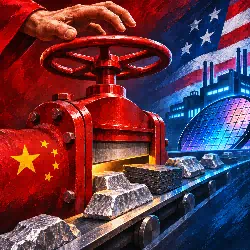
China’s one-year suspension of its expanded October 2025 rare earth and related export controls is due to expire on 10 November 2026 under MOFCOM Announcement No. 70. As of early November, no amending announcement extending the pause has been published, even though political statements from the September US-China summit indicated a broader trade truce extension to 10 January 2027.
Key facts:
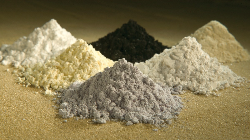
- Announcement No. 70 (7 November 2025) suspended six notices (Nos. 55, 56, 57, 58, 61, 62) covering five additional rare earths (holmium, erbium, thulium, europium, ytterbium), processing equipment and technologies, lithium battery and graphite anode materials, superhard materials, and an extraterritorial “0.1%” rule for foreign-made products containing Chinese-origin rare earths.
- The April 2025 licensing regime for seven medium/heavy rare earths (samarium, gadolinium, terbium, dysprosium, lutetium, scandium, yttrium) was never suspended and remains in force.
- A separate US-specific suspension on gallium, germanium, antimony and related items ends on 27 November.
- Chinese rare earth exports were down year-to-date in 2026; dysprosium and terbium are particularly relevant for high-temperature magnets in EVs, wind turbines, defence systems and industrial motors.
- Diversification efforts (Estonia magnet plant, EU RESourceEU plan, non-Chinese refining projects) remain limited in scale relative to China’s dominance in mining and especially processing.
Context and analysis:
The gap between political rhetoric and published legal text creates compliance and planning uncertainty for manufacturers. Full reinstatement of the October package would reimpose licensing on a wider set of materials and technologies, potentially affecting downstream production estimated by the IEA at trillions in value. Beijing has previously used licensing queues as a practical control even when rules remained formally in place. For the US and Europe, the deadline tests whether summit-level agreements translate into durable supply-chain arrangements or remain tactical leverage.
Open questions:
1. Will MOFCOM issue a last-minute extension matching the January 2027 truce date, or will the controls snap back?
2. How would reinstatement of the 0.1% extraterritorial rule affect non-Chinese component makers and defence supply chains?
3. To what extent can existing general licences and stockpiles buffer a sudden tightening, and for how long?
4. Does the approaching deadline strengthen incentives for non-Chinese magnet and refining capacity, or does it mainly serve as continued leverage in broader US-China talks?